


Michael Burry says AI is a 'byzantine' money loop — Nvidia's monster results could be ammo for his argument
Michael Burry says AI is a 'byzantine' money loop — Nvidia's monster results could be ammo for his argument

Eric EspositoThu, August 27, 2026 at 10:00 PM UTC
0
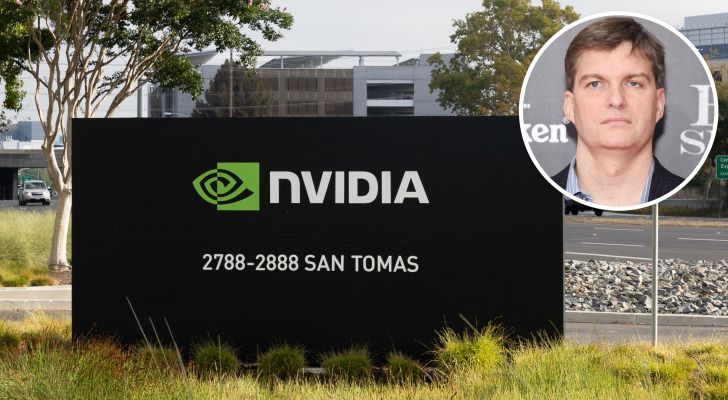
Expert expectations still haven’t caught up with Nvidia’s actual numbers.
In its Q2 fiscal 2027 earnings report, the chipmaker announced $96.2 billion in revenue and $59.6 billion in net income, both up over 100% year-over-year. Those numbers are well above Wall Street estimates at $91.96 billion in revenue and $50.94 billion in profits, as reported in The New York Times.
Must Read -
Dave Ramsey warns nearly 50% of Americans are making 1 big Social Security mistake. Here’s what it is and 3 simple steps to fix it ASAP
Jeff Bezos backs a platform that lets anyone invest in rental homes for as little as $100 — 6 ways to build wealth like a landlord without actually being one
Millionaires under 43 hold only 25% of their wealth in stocks. Here’s where their money is actually going
On the earnings call, CEO Jensen Huang proudly proclaimed, “We have a golden age of new AI labs and startups, multiple frontier labs scaling in parallel, a thriving open-model ecosystem and physical AI coming online — with strong momentum across the U.S. and around the world.”
Judging by the roughly 8% pop for Nvidia shares the next day, it’s clear many investors believe the future is rosy for the AI growth story.
But “Big Short” investor Michael Burry isn’t a buyer. If anything, Nvidia’s sterling report could be used as further evidence of his long-term bearish thesis on overinflated AI demand.
Before the earnings release, Burry pointed out the seeming disconnect between the AI growth narrative and Nvidia’s year-to-date performance, writing on Substack, “Nvidia’s current stock price is not congruent with the market’s narrative. On the face of it, the stock is wildly undervalued. Low PE for a big grower that currently commands monopoly rents. Yet, NVDA stock is treading water compared to recent years’ performance.”
One of Burry’s long-standing arguments for shorting AI stocks like Nvidia is that their demand is more about circular financing than genuine sales to customers. As The Street reported, Burry characterized these deals as “byzantine financing arrangements” that create a distorted view of the data center boom.
Compute needs Nvidia’s capital
On August 11, Nvidia tackled these accusations of “circular financing” head-on with a fresh arrangement to fuel AI’s next stage of growth. In this announcement, Nvidia said it was partnering with six financial institutions — including BlackRock, Apollo and Goldman Sachs — as “independent financing platforms” ready to inject $500 billion into AI infrastructure over the coming years.
Nvidia deliberately said this new arrangement should quell fears of circular financing in AI, arguing, “The capital providers independently underwrite each project — including the customer, demand, utilization, cash flow and residual value. Nvidia provides the platform; the investors make independent financing decisions.”
They also repeatedly assured readers that “the demand is real” for its GPUs, citing interest from “frontier AI labs, AI-native startups, enterprises, cloud providers and countries building AI services.”
In reality, this news only pushed some financial analysts further toward Burry’s cynical stance on chip sales.
Advertisement
One potentially worrying part of this whole arrangement is that Nvidia says it may guarantee up to 25% of the value of some projects — or, as they put it in their blog post, provide a “residual-value support mechanism.” So, even though Nvidia isn’t footing the entire bill, it does have a sizable financial stake in helping some AI projects get funded.
In a report in the Financial Times, Morgan Stanley estimated Nvidia’s total potential credit exposure could reach$200 billion by 2028 as it becomes more integral in financing AI infrastructure. As Morgan Stanley’s analysts warned, “Conventional leverage increasingly understates the [Nvidia] credit story as ecosystem support sits in contingent, contractual, and potentially off-balance-sheet forms.”
This credit risk exposure is a reason why Morgan Stanley rated Nvidia’s stock as “neutral” rather than a “buy.”
Read More: 4 simple ways to grow your cash without touching the stock market
D.A. Davidson’s Head of Technology Research, Gil Luria, raised a similar fear about how durable AI demand is, given Nvidia’s financer status. In a New York Times interview, Luria questioned, “How big would the market be if Nvidia weren’t funding its customers?”
Follow the cash behind the chips
Granted, Burry has a financial interest in spooking Nvidia investors, but it’s clear he’s not alone in questioning the reliability of this company’s revenues.
While nobody doubts that Nvidia’s revenues are “real,” the question is who will bear the most risk if customers fail to generate the lofty cash flows from their AI businesses after taking on so many commitments.
Two of the biggest customers causing the most concern are AI labs OpenAI and Anthropic, both of which are now in the private market.
Although the Wall Street Journal reported that Anthropic said it’s targeting an incredible total addressable market of $30 trillion in revenue investors have questions over how long it’ll take (or if) they can pay off their infrastructure spending.
On the positive side, Anthropic and OpenAI are expected to debut on the stock market sometime this year, according to CNBC. That would certainly bring some much-needed transparency to the AI industry. Whether or not their balance sheets will embolden Burry’s case, however, remains to be seen.
What To Read Next -
The tax breaks in Trump's 'big beautiful bill' expire after 2028 — and experts say most people won't act in time. What to do before the window closes
Here’s the average income of Americans by age in 2026. Are you keeping up or falling behind?
A single line on your car insurance policy could be inflating your premium by up to 30% — here's what to change
I'm 49 years old and have nothing saved for retirement. What do I do? Don't panic. Here are 7 ways to catch up fast
Join 250,000+ readers and get Moneywise’s best stories and exclusive interviews first — clear insights curated and delivered weekly. Subscribe now.
This article provides information only and should not be construed as advice. It is provided without warranty of any kind.
Source: “AOL Money”
