


Meta may be $18bn poorer, but it is still the real winner
Meta may be $18bn poorer, but it is still the real winner

Janet DaleySat, August 29, 2026 at 2:47 PM UTC
0
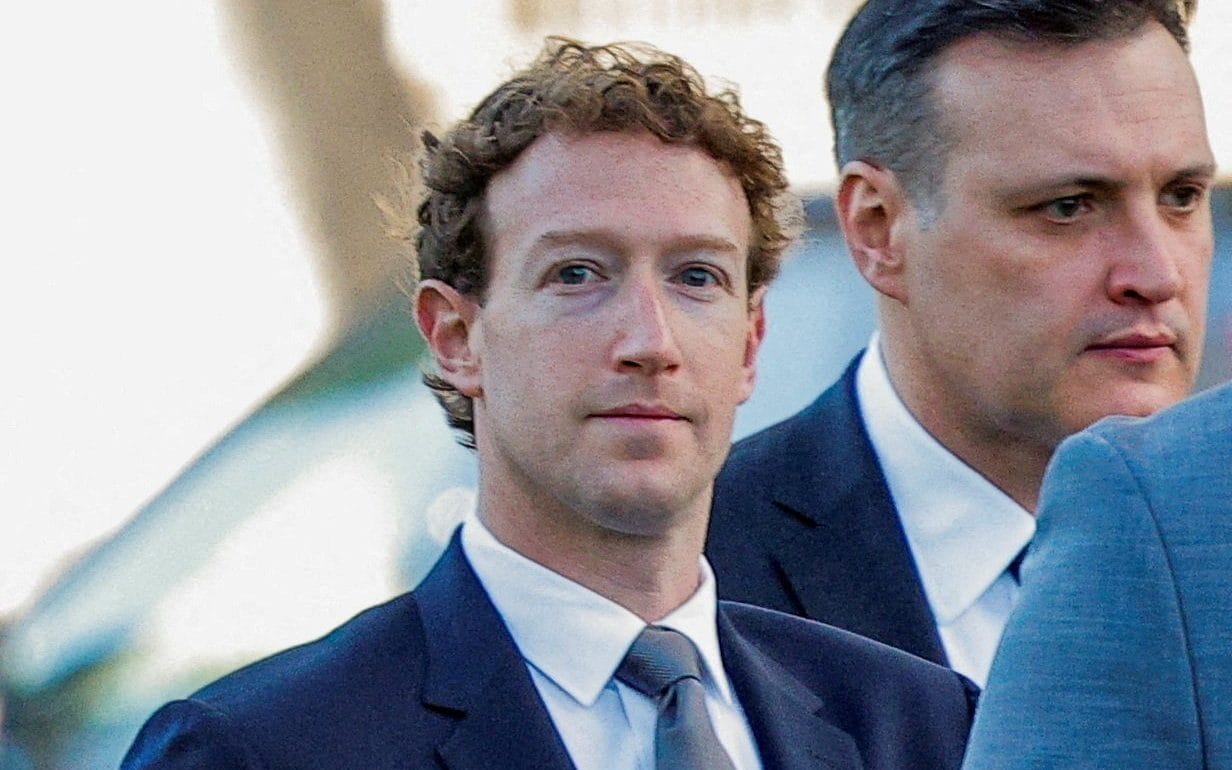
The social media giant will restrict how children can use Instagram and Facebook - Mike Blake/Reuters
Everybody is saying that this was social media’s “big tobacco” moment: the historic point at which an industry had to face up to its responsibilities and stop ignoring the damage that its product was causing. But is big social media in fact doing any of this? They have not, in fact, acknowledged that they are in any way to blame.
Social media algorithms are not opioids. But what happened in the Meta case had the potential of being (but wasn’t in the end) the industry’s “big opioid” moment. There are echoes of the scandal in which the Purdue pharmaceutical company, owned by the Sackler family, was found to be culpable of marketing a pain-killing product that produced addiction so severe that it could result in death.
The Meta settlement, unlike the Purdue Pharma story, has not ended with the disgrace of the company and its founders – or indeed a finding of culpability. Where the Sackler name fell into such disrepute that it had to be removed from the art galleries which the family had donated to public museums, the founders of Meta walked from the court in California with their pride – and their empires – largely intact.
The conclusion – if it can be called that – of the legal action against them seemed bizarrely contradictory. Mark Zuckerberg agreed for Meta – if other social-media firms agree to similar arrangements and restrictions – to hand over $18bn as a settlement to US state governments and territories including those which had not been directly involved in the suit. (This sounds like a vast fortune but in terms of his own wealth and Meta’s share price, it is peanuts.)
The curious thing about this settlement in the terms of ordinary human logic as opposed to acceptable legal procedure, is that the company was offering this seemingly vast sum of money even though it did not admit any liability. In other words – again to put it in normal human language – the company is saying, we are prepared to pay up but not accept the blame.
And at the same time, Meta has also agreed to amend – but not entirely remove – those features of its media such as infinite scroll, autoplay and algorithmic recommendations which had been cited as particularly dangerous to children because of their addictive properties. These will now be time limited and turned off at the times of day and night when children were thought to be most vulnerable.
So let’s get this straight. Meta admits no liability – in other words, claims that the things they were doing were not harmful or dangerous. But anyway, they promise that they won’t do them any more.
Or at least, they will modify them so that they won’t be – what? Harmful and dangerous? No, that can’t be right because the defence argument was that they were never harmful or dangerous. So what exactly has been proved – or not proved – here?
The attorneys general of those states that brought the action wanted to establish that Meta was marketing a product that was deliberately designed to be addictive. This would have made the Sackler analogy particularly apt. It was that explicit claim about motive that Meta was determined to defeat because it would have implied criminal liability and Sackler-level disgrace. So the Zuckerberg defence won the argument that mattered most to their survival.
Advertisement

The Sackler family agreed to surrender ownership of Purdue Pharma and contribute billions of dollars to settle lawsuits - Douglas Healey/AP
They would pay out money in compensation and amend some of their practices out of the goodness of their hearts and to show contrition for any damage caused – even though none of it was their fault. It was critical that they distinguish their product – which they believed could be used safely much of the time – from an opioid which would inevitably cause addiction.
And they succeeded. The settlement appears to have been accepted without challenge. So however much money they pay out and whatever minor tweaks they may make to their products, they won this case.
There is a particular line of defence of Meta’s position taken up and endlessly repeated by apparently conscientious parties which really needs to be addressed. That is that whatever potential endangerment the Meta sites may have presented to children, it was the responsibility of their parents to prevent the excessive exposure that might have caused the damage. It was not the moral duty of the social media company to protect everybody’s children.
I wonder whether the people who argue this way would apply the same principle to, say, the sale of alcohol? Should we remove the minimum age limit for buying beer in a pub, or liquor from a supermarket because it is up to parents to see to it that their 10-year-olds do not purchase alcohol?
Concern for the welfare of children is not a purely private matter. We do not regard their safety as nobody’s business outside their own immediate family. If that were so, the law would not be able to intervene to prevent parents from abusing their children. The state does assume the right to remove children from dangerous circumstances in their familial homes because children are considered to be everybody’s business. There is something deeply embedded in human conscience, perhaps for hard evolutionary reasons, that decrees that the young must be protected by the whole community.
So can we shut down this rather nasty insinuation that children cannot be harmed by any agency or force if their parents are sufficiently caring? As if bereaved or distraught families had only themselves to blame for the sinister, insidious influence of enterprises which create devices designed to captivate and hold attention, whatever the consequences?
But this is not just about children. The most insidious aspect of this farrago is the assumption that the amorality of social media is only a risk to the immature and vulnerable.
Companies like Meta created the template for what is now the prevailing defence of these hugely powerful forces. Unlike any of the established media forms, they accept only very limited responsibility – legal or ethical – for their content. They insist that they cannot be susceptible to any governmental limits or national jurisdictions because, not being “publishers” in the traditional sense, they do not control what appears on their sites.
They are, in other words, lawless and beyond the reach of democratic accountability. This might be one of the worst examples of power without responsibility that the modern world has faced.
Source: “AOL Money”
