


Here’s Where Tariff Costs Are Piling Up—and Why Some States Are Hit Much Harder
Here’s Where Tariff Costs Are Piling Up—and Why Some States Are Hit Much Harder

Peter GrattonThu, August 27, 2026 at 7:53 PM UTC
122
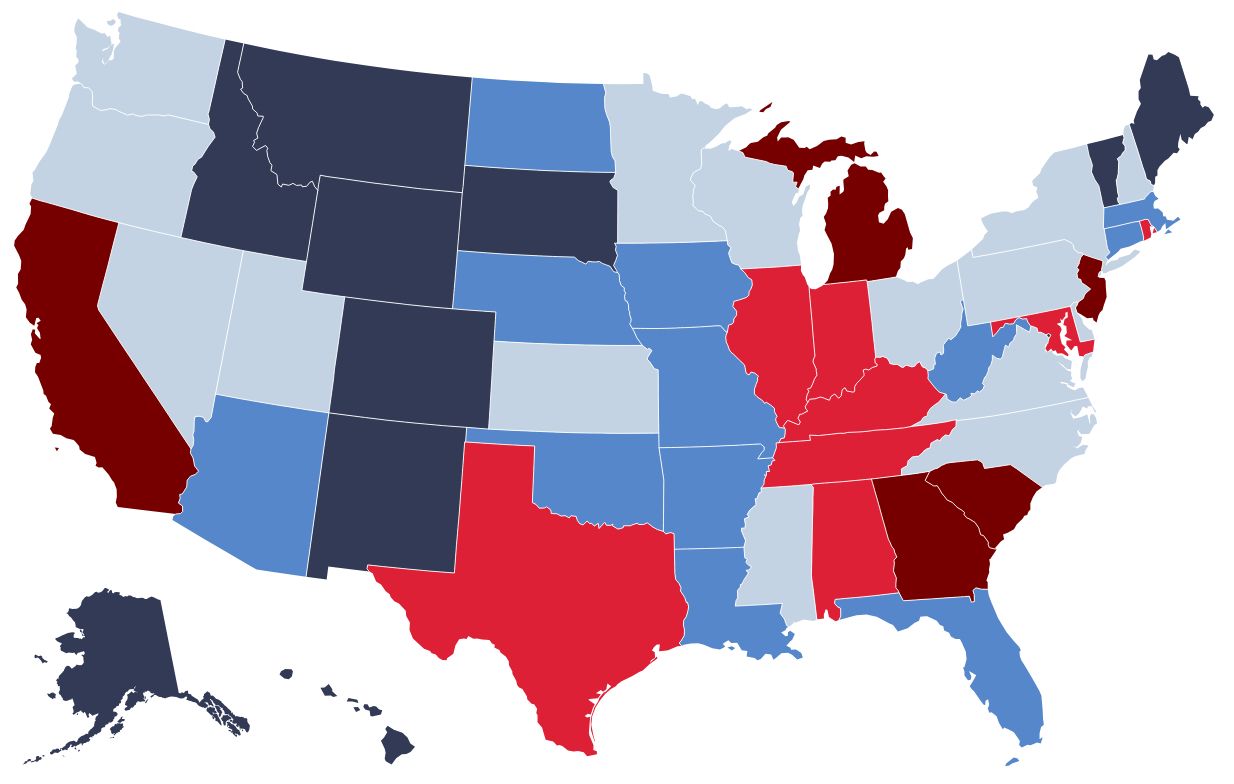
New state-by-state data puts the cost of tariffs at $343 billion since 2025. However, some states are hit harder than others.Credit: InvestopediaKey Takeaways -
U.S. importers have paid $343 billion in executive tariffs since January 2025, with Michigan, Georgia, and other auto-heavy states bearing the highest costs per household.
Refunds from voided tariffs have boosted corporate profits, but consumers may not see the benefits due to limited refund pass-through.
A new U.S.-Canada trade dispute is set to increase tariff costs for northern and industrial states, those already most impacted by executive tariffs.
Tariffs apply nationally, but the cost is landing hardest on the states that build the cars and machinery that the duties were supposed to protect.
Executive tariffs—those imposed by presidential action on top of regular statutory duties—have cost U.S. importers about $343 billion since January 2025, according to state-level data released Wednesday by the National Taxpayers Union Foundation. California leads with $63 billion, followed by Texas at $37 billion and Michigan at $23 billion.
Raw totals, though, skew toward the bigger states. When measured per household, Michigan moves to the top slot at $5,619. That’s more than 30 times the District of Columbia, which had the lowest total per household in the country.
Why This Matters to You
Importers pay tariffs upfront, but the cost can spread across the economy through higher prices, thinner margins, and slower hiring. Your exposure depends not just on what you buy, but also on the industries that support the jobs where you live.
The auto belt ranks highest in tariffs per household. Michigan, Georgia, South Carolina, Tennessee, and Kentucky all rank in the top seven. For each, vehicles, auto parts, or metals account for the largest share of duties.
“The highest exposure states tend to be those that rely especially heavily on imports of inputs used to produce goods,” said Bryan Riley, director of NTUF’s Free Trade Initiative.
When President Donald Trump imposed auto tariffs in April 2025, he said they were designed to “shift manufacturing activity into the United States” and “create jobs in the automotive industry.” But Riley said that higher import prices in states like Michigan and Georgia are “making it harder for them to grow and to create new jobs.”
Thirty-seven of the 52 jurisdictions, which include Washington, D.C. and Puerto Rico, have paid more than $1 billion in tariffs. Montana, Wyoming, and Alaska had the smallest totals.
Advertisement
But lower totals don’t mean less exposure. The tracker assigns duties by the state where imports land, Riley said, and once those goods ship onward, the burden passes to Americans in other states.
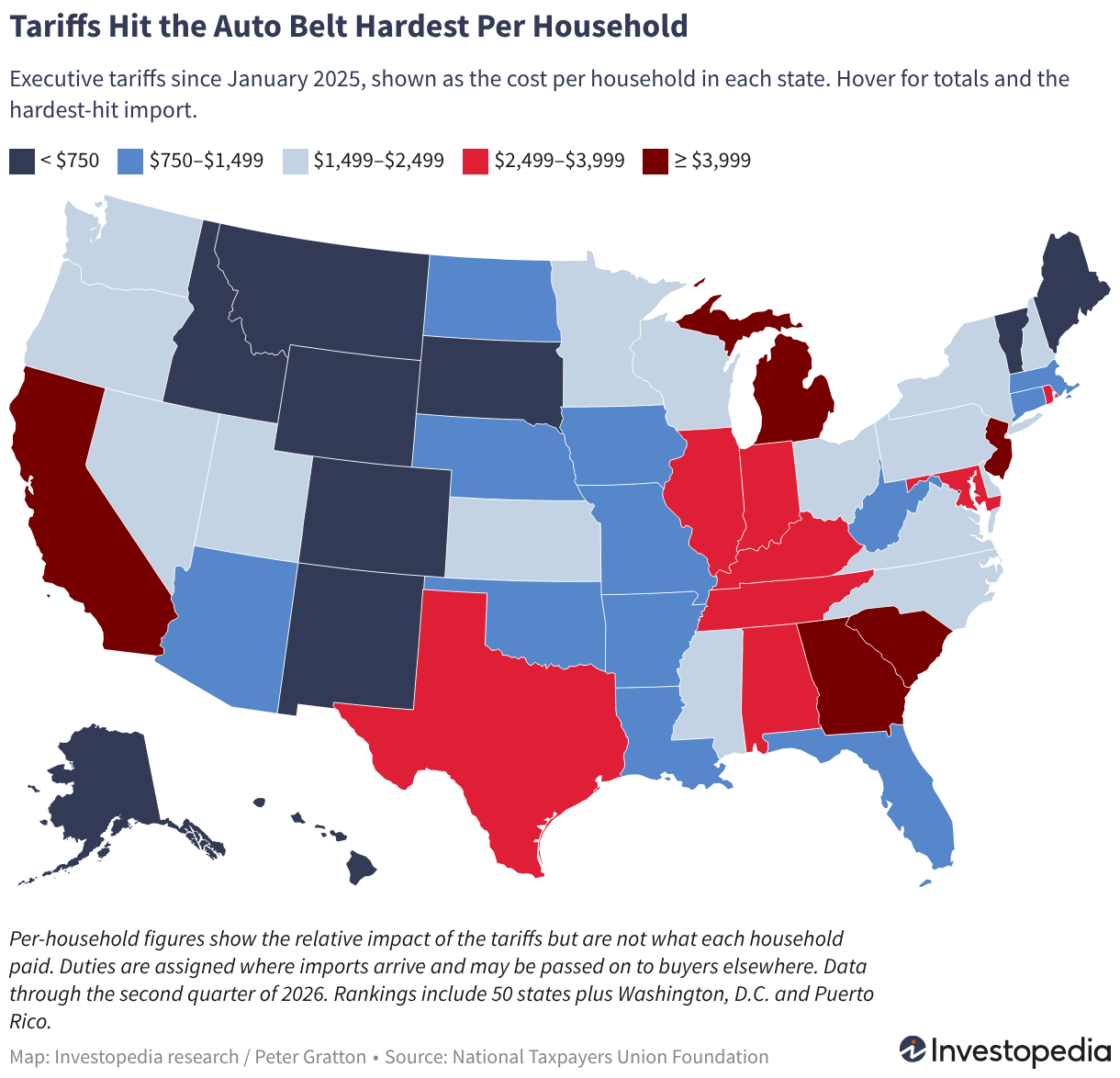
The state figures are the sum since the beginning of the second Trump administration, roughly 18 months. Annual estimates from other groups put the household cost at a lower level.
Yale’s Budget Lab estimates tariffs are costing households about $1,100 per household a year under current law. The Tax Foundation puts the 2026 figure at $840 per household, down from $1,000 in 2025, because new tariffs haven’t fully replaced the ones the Supreme Court struck down in February.
The court’s ruling puts an asterisk on these totals. The justices voided tariffs imposed under the International Emergency Economic Powers Act (IEEPA), the statute the administration used for its first round of duties. Customs and Border Protection refunded about $71 billion in May and June, most of it IEEPA money. Well over half of the $166 billion collected under that authority has yet to be paid back.
NTUF’s totals don’t subtract those refunds, Riley said, because their figures measure the hit to each state when the duties were collected.
Another matter is whether those refunds will reach the customers who paid at the cash register, not just the companies that paid at the border. Annualized corporate profits surged by a near-record $400 billion in the second quarter due in part to tariff refunds.Some companies say they’ll pass refunds along to consumers, but some businesses, specifically small ones, often lack the accounting systems to trace a refund back to the customers who paid, Riley said.
Then there’s the latest escalation in the administration’s trade wars. The U.S. imposed 50% tariffs on about $20 billion in Canadian imports on Saturday, including goods ranging from hockey sticks to dog muzzles, after trade talks collapsed Friday night.
Canada said Tuesday it plans to match those duties dollar for dollar on U.S. metals and wood starting Sept. 8, alongside a $7.5 billion aid package for its own businesses. Canada is the top trading partner for most northern and industrial states, so the same states that lead in the rankings will soon face an even steeper tariff tab.
on Investopedia
Source: “AOL Money”
