


Fed expected to hold rates steady this week despite hot inflation — but signal they're not done hiking
Fed expected to hold rates steady this week despite hot inflation — but signal they're not done hiking

Jennifer SchonbergerSun, October 25, 2026 at 9:00 PM UTC
0
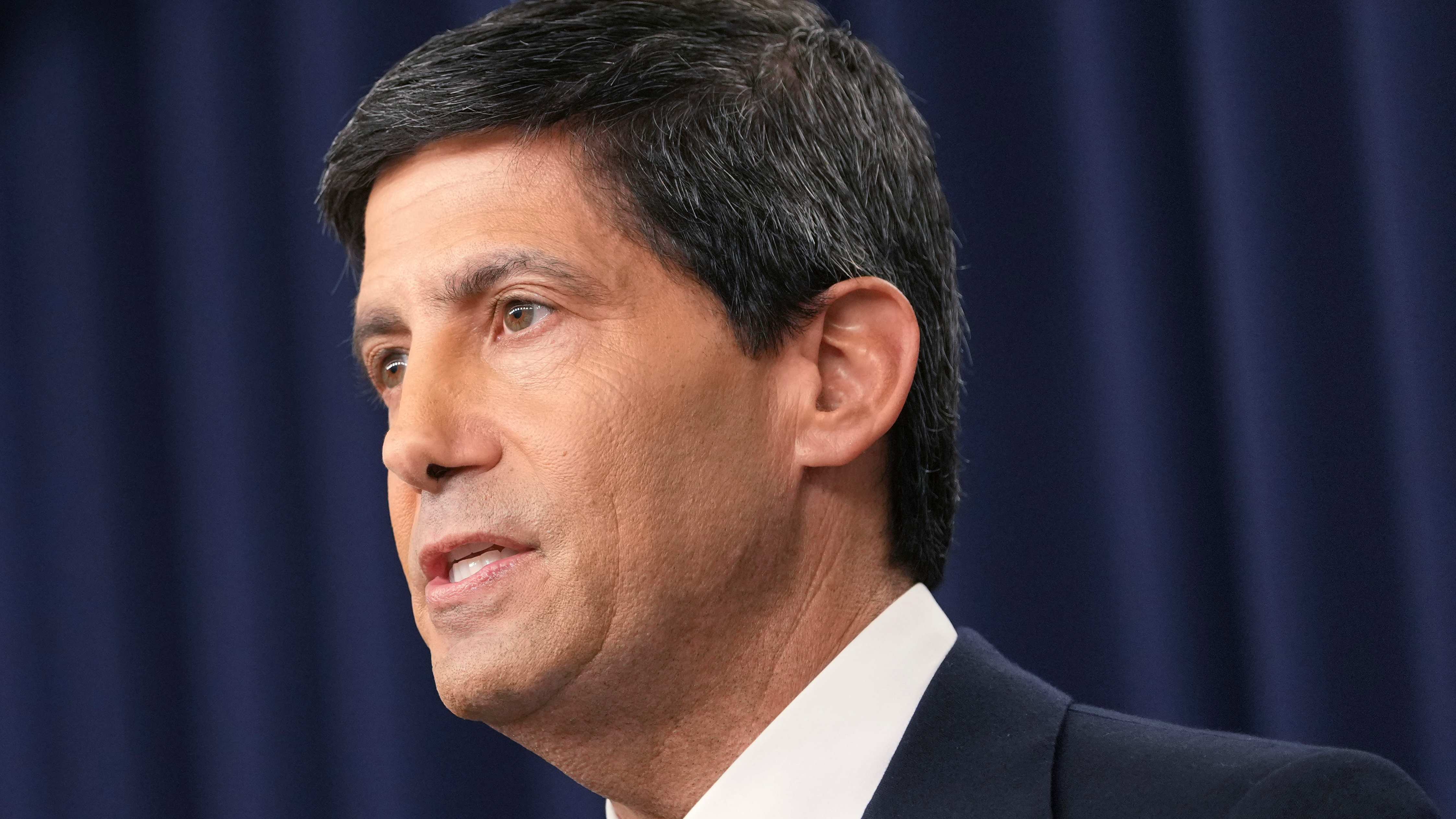
The Federal Reserve heads into its interest-rate decision this week facing hotter inflation, keeping the meeting live even as markets widely expect the central bank to hold interest rates steady just days before the midterm elections.
Alan Blinder, a former Fed vice chair and a Princeton University economics professor, is expecting a "hawkish pause."
Although Fed Chairman Kevin Warsh doesn't favor telegraphing the central bank's next move, Blinder said the moment calls for clarity.
"This is a perfect time for clear forward guidance that doesn't quite say, but strongly hints, we're pausing now, but we stand ready to raise again and even give a hint that the next meeting might be the next interest rate hike."
Inflation heated up in September, as the Consumer Price Index accelerated to 3.7% from a year earlier. Core CPI, which excludes food and energy, ticked up to 2.6%, while wholesale prices jumped more than 6%, and the Fed's preferred inflation gauge — the core Personal Consumption Expenditures index — is projected to top 3%.
In his last remarks before this week's policy meeting, many observers think Warsh underscored what Fed Vice Chair Philip Jefferson and New York Fed president John Williams previously said: that despite hot inflation reports, they would like to take time to review the data as they consider the prospect of further rate hikes.
Read more: How jobs, inflation, and the Fed are all related
Warsh neither endorsed nor pushed back on his colleagues' recent signals that they'd like to wait for more data, but he noted that the world had "broadly conformed to our expectations" since the Fed's September meeting.
After raising rates for the first time in more than three years in September, minutes from that meeting read that most participants assessed that another increase would likely be appropriate by year-end.
Ken Rogoff, Harvard University professor and former chief economist of the International Monetary Fund, told Yahoo Finance he thinks the Fed will hold rates steady next week because of the proximity to the midterm elections less than a week later.
"The fundamentals call for raising the rate," Rogoff said. "If you didn't have an election, they should hike … But they are going to hold rates steady and talk about how they're probably going to increase it once or twice at least in the near future."
Blinder agrees that the midterms are part of the consideration. "When it's that close to an election there's something to be said for keeping your head down," he said, noting that while it is far from the only factor, election proximity serves as a "minus" in the mental basket for raising rates.
"The Fed can then move pretty quickly later," he said.
Advertisement
Esther George, former head of the Kansas City Federal Reserve, acknowledged the optics of raising rates right before an election, but disputed it's a factor. "It certainly wouldn't be consistent with an independent central bank that is looking at the data and making a judgment about a forecast."
Waiting for data
George also doesn't expect a rate hike but thinks officials should communicate their view of economic conditions.
"Communication is more important than ever when you get into times like this where you see the economy pushing and pulling in different directions," George said.
The center of the Fed's interest-rate-setting committee is signaling a desire for more data and doesn't want to slow economic growth.
Chicago Fed president Austan Goolsbee told Yahoo Finance this month that hotter-than-expected September consumer inflation was "discouraging" but said he wants to wait for more data before raising interest rates further. He said core inflation remaining as high as it is now would be neither "acceptable" nor "compatible with the Fed target, and our policy needs to address that."
However, other Fed officials, including Cleveland Fed President Beth Hammack, have said they would rather make small hikes now to rein in what they see as broadening inflation. The hawkish camp fears that waiting too long could force drastic actions later, akin to the aggressive tightening campaign the central bank was forced to mount in 2022.
George noted that the justification for a pause remains murky.
"I haven't heard clearly, 'here's why waiting would be appropriate,'" George said. "What is tentative in the economy today that gives you hesitation if you're not going to move? Of course you're going to get more data, but does one more data point shift your trend? Does one more data point tell you that persistence is unacceptable now?"
Blinder sees a stronger case for holding.
"If you just went by the last few data releases, you might well want to raise interest rates again, and there is a case for that," said Blinder. "But the broader picture, I think, permits pausing now."
It's not urgent for the Fed to hike rates despite the uptick in CPI, Blinder added, because he doesn't see a clear overall trend toward higher inflation.
"What there is, is inflation that's stubbornly too high," he said. "The trend in inflation looks to me quite flat. Yes, it goes up sometimes, yes, it comes down sometimes, but it's pretty flat over the past three or four years on net despite monthly ticks up or down."
The Fed's benchmark rate is currently in the range of 3.75% to 4%. Traders are pricing in nearly 90% odds it will hold next week, but see 70% odds of a quarter-point hike in December.
Follow Jennifer Schonberger on X @Jenniferisms and on Instagram.
Source: “AOL Money”
